

Ferme Little Horn

Un texte de Andrea Conway
Paru dans le numéro Été/Summer 2026
Publié le : 28 mai 2026
Dernière mise à jour : 28 mai 2026
At Ferme Little Horn, Giselle and Val raise Icelandic sheep—a heritage “triple-purpose breed” valued for their meat, wool, and milk.
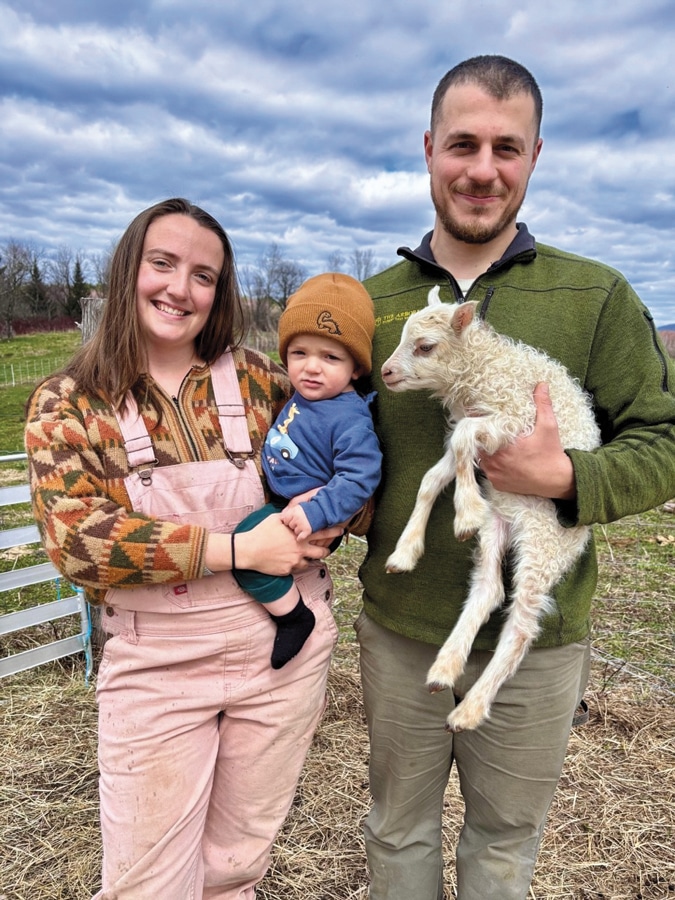
Ferme Little Horn is now in its third year of producing high-quality grass-fed lamb, Icelandic sheep’s wool, and sheepskins. I met owners Giselle Steventon and Val Haziri in early spring while they were away visiting family. Over a virtual call from Kosovo, we delved into their story as they passed their giggling 8-month-old son Dren back and forth.
Before settling in Brome, Val and Giselle were on entirely different continents and career paths. Giselle is from Toronto and comes from a family of artists, with roots in Quebec through her mother. A fan of fine cuisine, she was working as a server and on documentary films about where our food comes from, when she became more interested in the subject she was covering.
Val, originally from Kosovo, grew up in Ireland, and his passion was in the culinary industry. While working at Aniar, a Michelin-star restaurant in western Ireland, he would visit the farms that supplied the kitchen. His interest started to shift towards the fresh air of farm life.
When asked how they met, Giselle shyly revealed they met on Tinder while she was visiting a friend in Ireland. When her flight home was cancelled due to an airline bankruptcy, her mother and sister suggested she stay with that nice guy she had just met. In Giselle’s words: “The rest is history.”
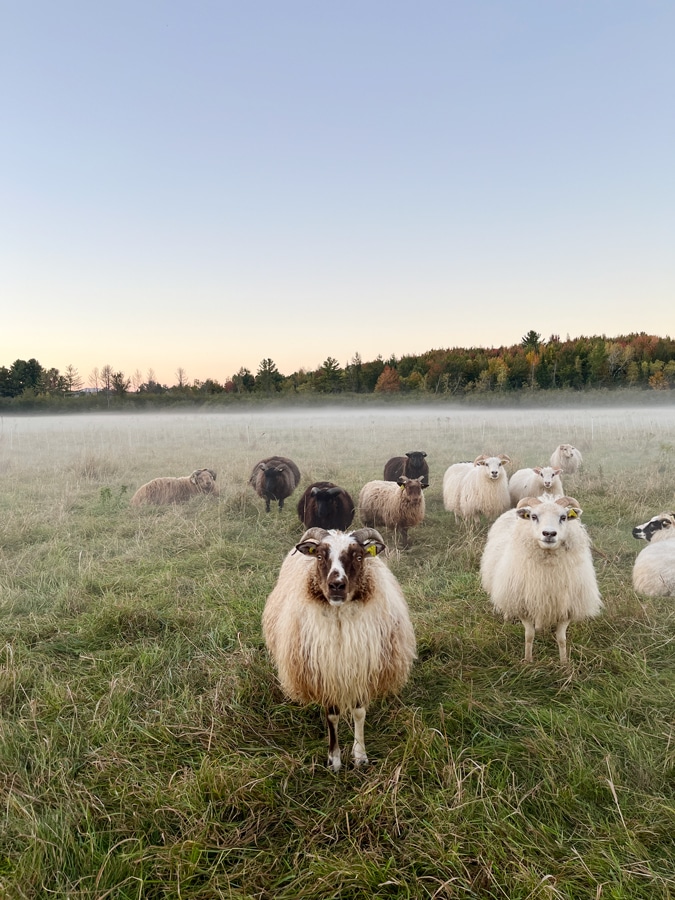
With Giselle’s and Val’s interests aligned, they spent their early twenties interning at several farms, including Patch Farms in Brome. Eventually, they decided to start their own farm, choosing Icelandic sheep—a heritage “triple-purpose breed” valued for their meat, wool, and milk. Their smaller size allows for easier births, and the mothers are highly nurturing. These fine-boned animals also provide a good meat yield without needing any grain. Their wool contains less lanolin, contributing to a milder, less gamey flavoured meat.
Upon their return, I visited the picturesque farm. I learned that their herd spends the entire winter outside, and in the summer, they are moved through pastures using a practice called regenerative grazing. During lambing season, Val and Giselle check on the mothers every three hours, night and day. What may surprise some is that they give names to their sheep. “Naming them and using every part of the animal gives their life value,” Giselle explains.
Giselle is currently developing a line of skincare products, and her sheepskins are absolutely gorgeous. Val is a butcher by trade, so everything is processed by their own hands. At a time when many of us are more conscious of food miles, this family is, as Val puts it, “counting their food miles in footsteps.”
Both Val and Giselle maintain full-time jobs alongside running the farm, hoping that someday soon they will be able to focus solely on their farm. Ferme Little Horn products can also be found in local restaurants—I recently tasted exceptional lamb dumplings at Sauce Prune.
For more information about products and farm visits, go to www.littlehorn.ca.
Andrea Conway