

Putting My Garden to Bed

Un texte de Sarah Cobb
Paru dans le numéro Hiver/Winter 2026-2027
Publié le : 12 novembre 2026
Dernière mise à jour : 12 novembre 2026
It is a choice to feel hurt, after all, a choice we make over and over. Persisting in being angry with someone for refusing to change means you are also refusing to change.
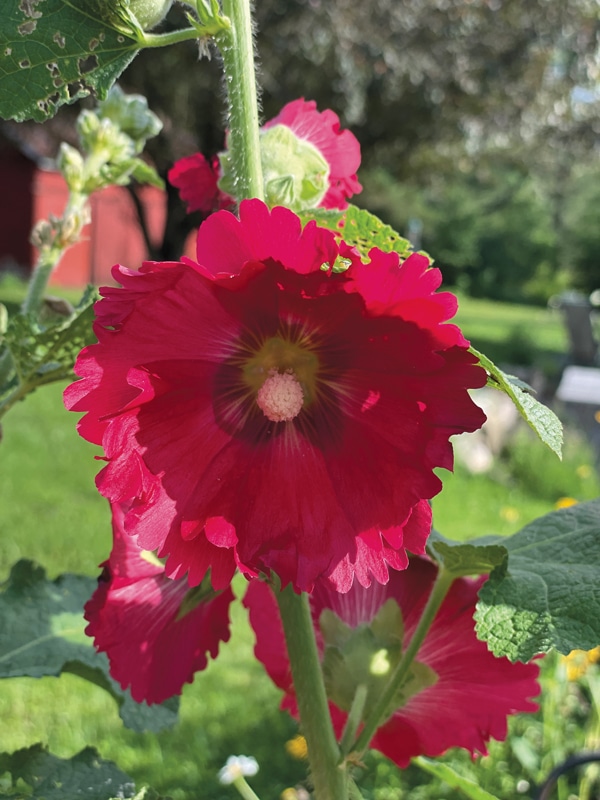
Goldilocks. Photo by Sarah Cobb
I made many mistakes in the vegetable patch this year. I was away for three weeks during the peak garden season and came home to weeds run rampant, a garden completely out of control. The raspberry bushes had breached the fence, the hollyhocks hung threateningly over the rhubarb, the greedy tenant nettles decided the little corner I’d allotted them wasn’t nearly enough. My eggplants were practically the same size in September as the day I transplanted them out in June. I’d added too much of one kind of compost and not enough of another, which meant I had great greens but the saddest, most pathetic little fruit. I managed to keep the caterpillars out of my onions and garlic but forgot all about my poor leeks. Sadly, the caterpillars did not. Not exactly a banner year.
On Letting Go
Then, I went out and prepped a few beds for the garlic. Once they were in the ground, I threw a few bags of leaves on top. From then until the happy day the seed catalogue arrives in February, it’s like the garden never existed. It becomes a square of fenced off lawn that just disappears under the snow. And almost miraculously it seems, all the mistakes I made disappear along with it. Why is it so easy for me to let go of that and so hard to let go of other things?
Holding On
Until the day my mother died, my weekly visits usually ended with me crying on the way home, unable to accept that my mum would rather watch home renovation shows than talk to me. It’s not like I didn’t know it was going to happen but for some reason I just could not get past it. It is a choice to feel hurt, after all, a choice I made over and over. Persisting in being angry with someone for refusing to change means you are also refusing to change. My Cartesian brain knows it makes no real sense; choosing to hang on to judgment and hurt. As the old saying goes “Resentment is like drinking poison and waiting for the other person to die.”
As my husband pointed out to me, no one moves through this world without hurting someone. I know I have said and done things that have damaged the ones I love. Causing pain that no doubt required them a measure of equanimity to forgive and forget. Imagining the grace of someone letting go of their anger toward me fills me with gratitude and pushes me to do the same.
Cultivating Compassion
Thích Nhat Hanh, the Buddhist monk, spent much of his life teaching others how to let go. Rather than retaliate or judge when someone does or says something hurtful to you, he suggested, think about the suffering the other person must have experienced to cause them to lash out at you. If you work hard at cultivating compassion for their suffering, you may find that your anger and resentment morph into something that brings you peace. And, maybe save some of that compassion for yourself. Turn the mud that has been slung at you into soil to grow lotus flowers, he says. Your garden will be better for it.
Sarah Cobb